Abstract
Human-like agents should model how stable dispositions interact with structured social contexts. PsyAgent couples a Big Five trait prior with contextual scaffolds inspired by cognitive-social co-structure. The framework includes (i) Individual Structure (IS), a machine-usable profile capturing traits, facets, behavioral tendencies, cognitive style, and background; and (ii) Multi-Scenario Contexting (MSC), a library of role–relationship–norm frames spanning eight interaction arenas. At inference time, structured prompts bind the active scenario to the agent profile, enabling behavior that is stable yet context-sensitive. We instantiate IS×MSC to synthesize supervision data and fine-tune compact LLMs, achieving strong persona fidelity, contextual appropriateness, and long-horizon stability compared with general-purpose baselines.
Project Overview
- Goal: build personality-grounded, socially competent agents that remain consistent while adapting to roles, norms, and stakes.
- Key idea: make the persona computable (IS) and make the context explicit (MSC).
- Training: generate IS×MSC supervision for SFT, and optionally apply preference optimization (e.g., DPO) to refine alignment.
- Evaluation: trait fidelity (e.g., profile alignment), persona consistency, contextual appropriateness, and benchmark performance.
For implementation and reproduction details, please see the main repository README and each branch-level README.
Figures
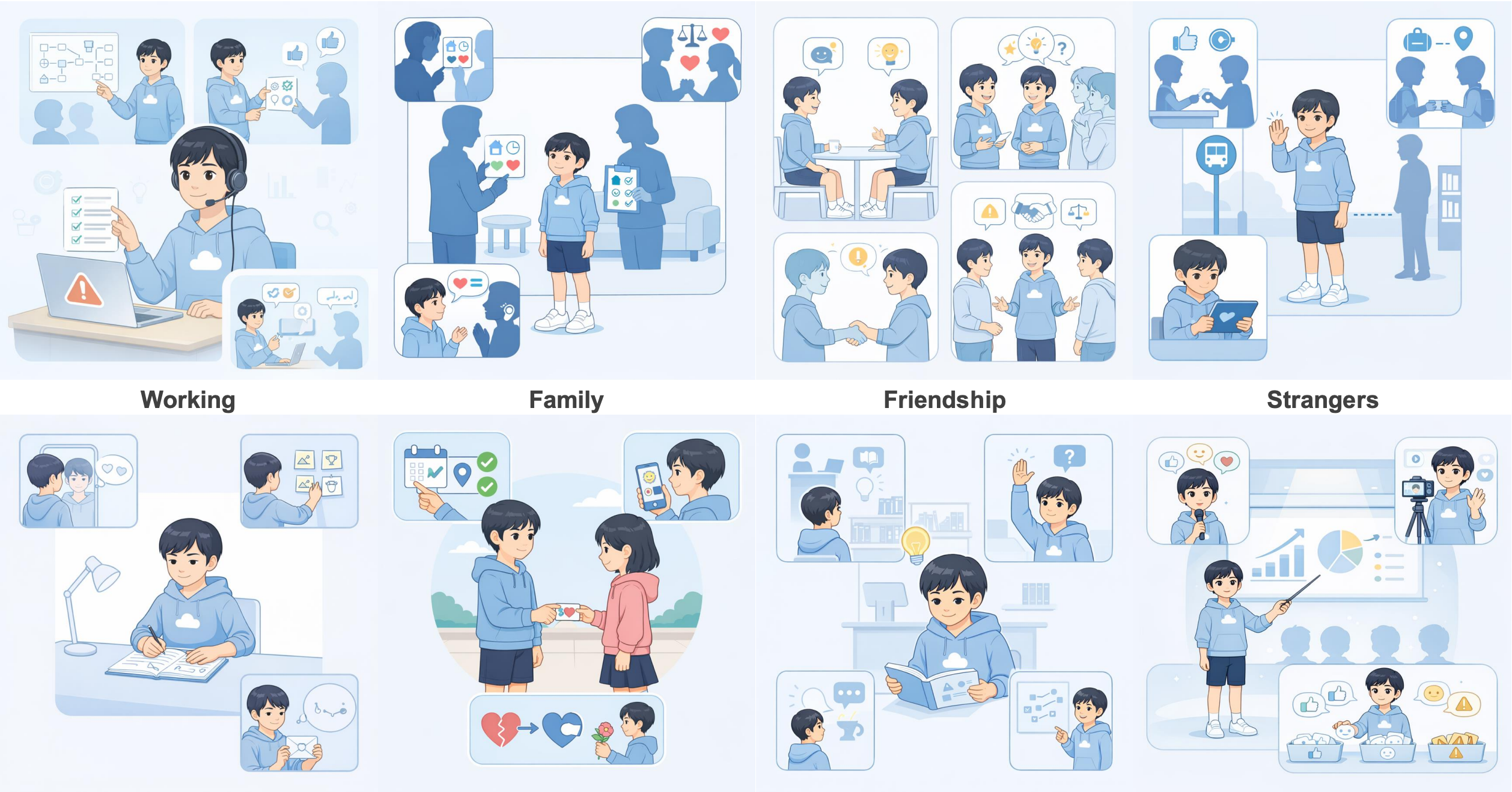
Figure 1: Multi-Scenario Contexting (MSC). Eight interaction arenas used to organize scenario coverage: Working, Family, Friendship, Strangers, Solitary, Romantic, Learning, and Public.
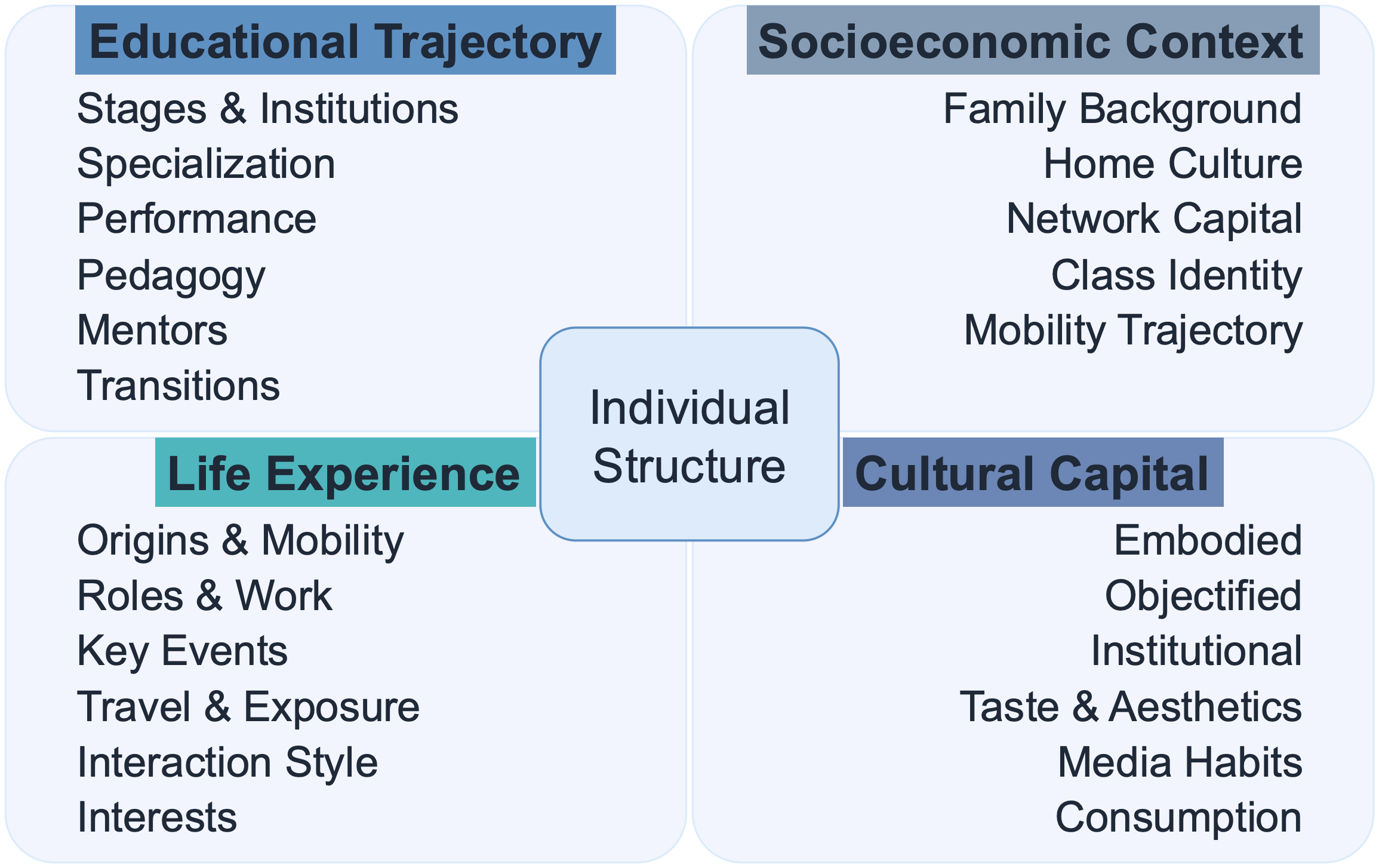
Figure 2: Individual Structure (IS). A compact, machine-usable profile spanning Educational Trajectory, Life Experience, Socioeconomic Context, and Cultural Capital for conditioning and analysis.
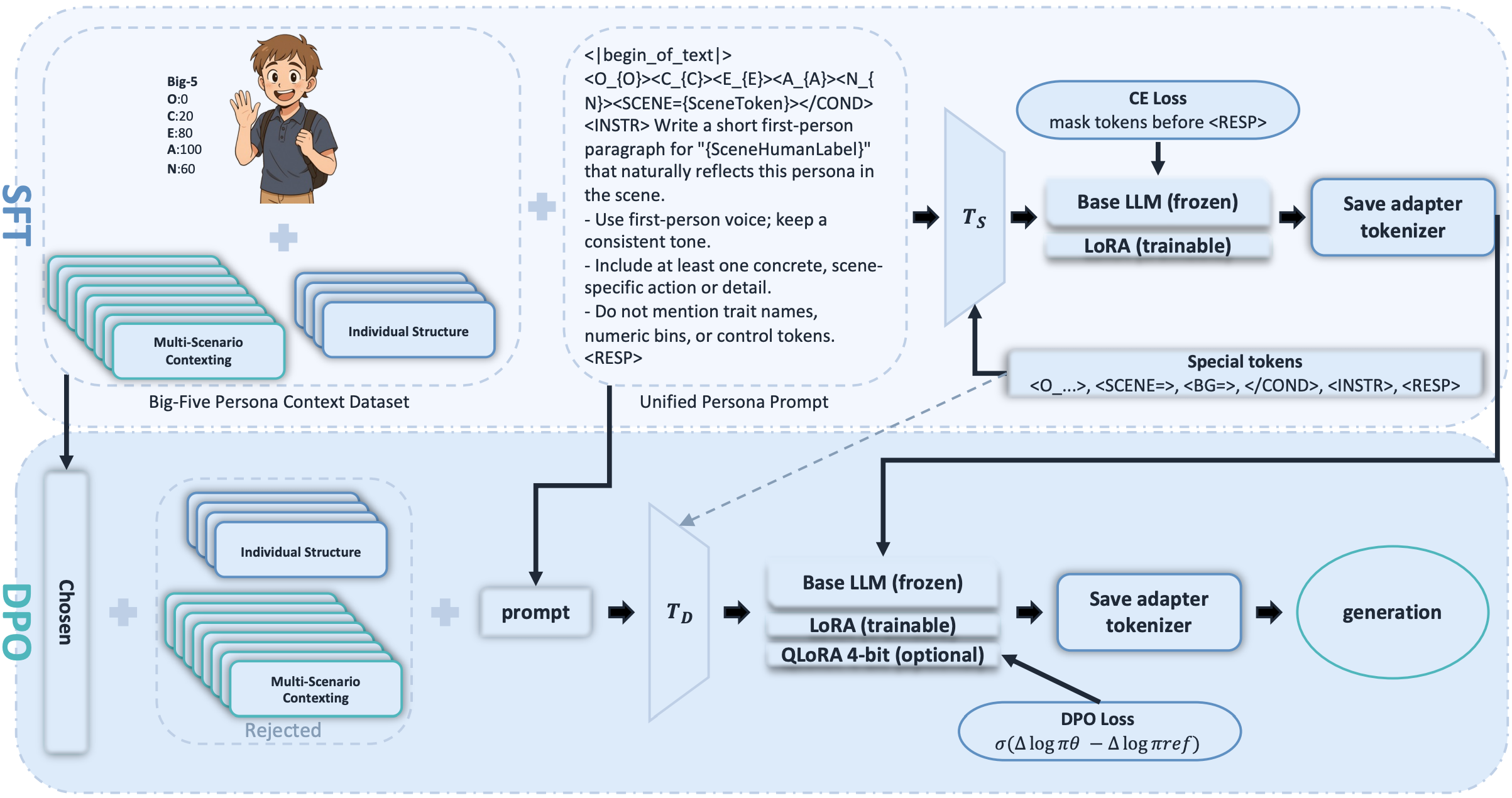
Figure 3: Training pipeline overview. IS×MSC-driven dataset authoring and adapter-based post-training (SFT, optional DPO) to produce persona-consistent and context-aware generations.
Results
- Trait fidelity: PsyAgent improves alignment to target Big Five profiles, especially for smaller backbones.
- Ablations: IS primarily boosts trait fidelity and style stability; MSC improves norm awareness and decision fit; both are important across scenarios.
- Generalization: Gains transfer to external dialogue benchmarks and persona benchmarks under controlled comparisons.
Tables
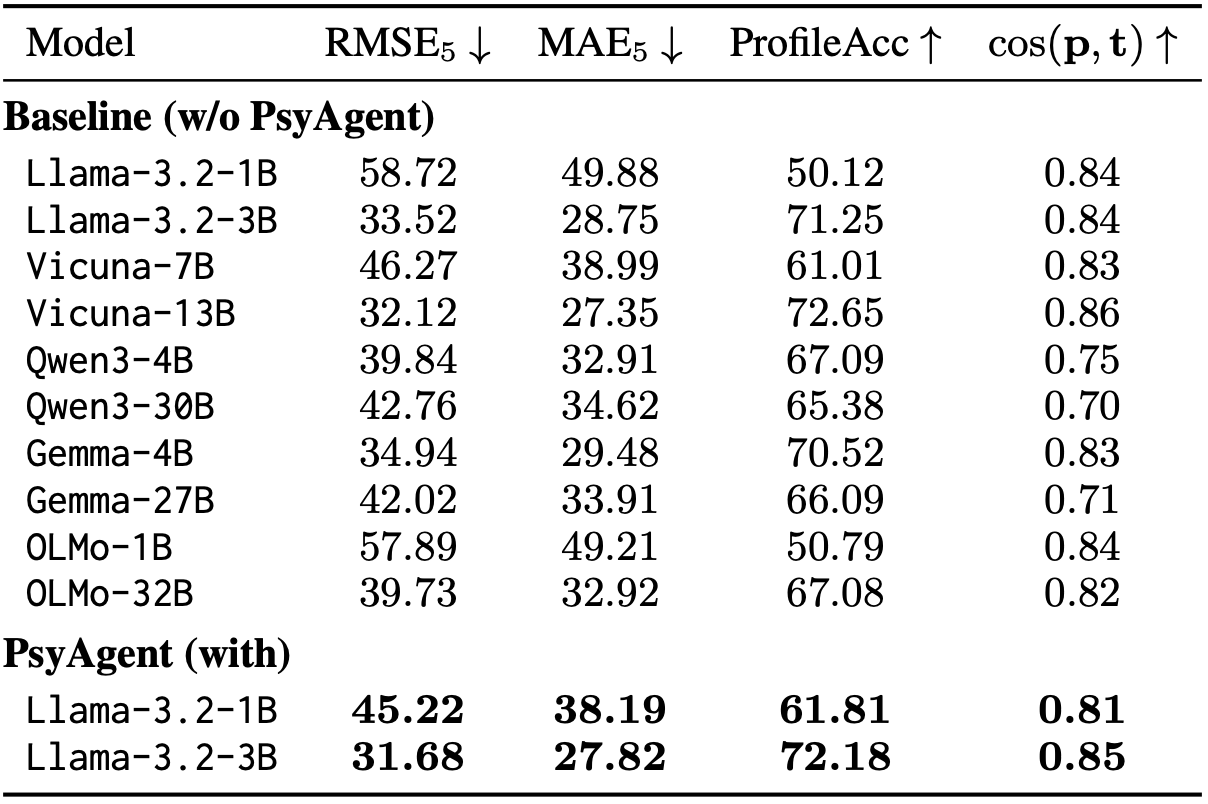
Table 1: Comparing models with and without PsyAgent using profile-space metrics (e.g., MAE/RMSE-based alignment and ProfileAcc).
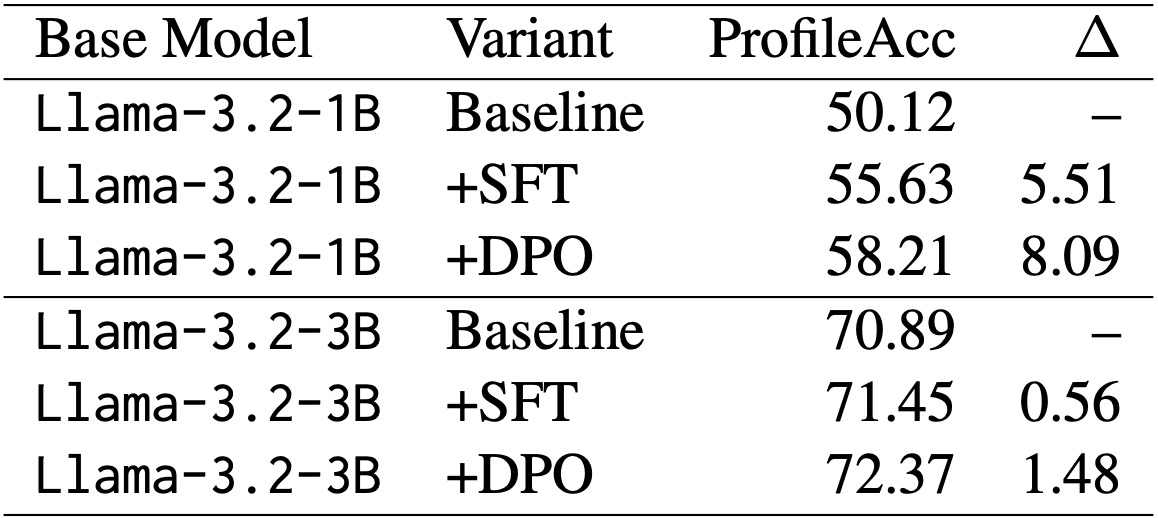
Table 2: Within PsyAgent, SFT and DPO improve profile alignment over the baseline for compact backbones.
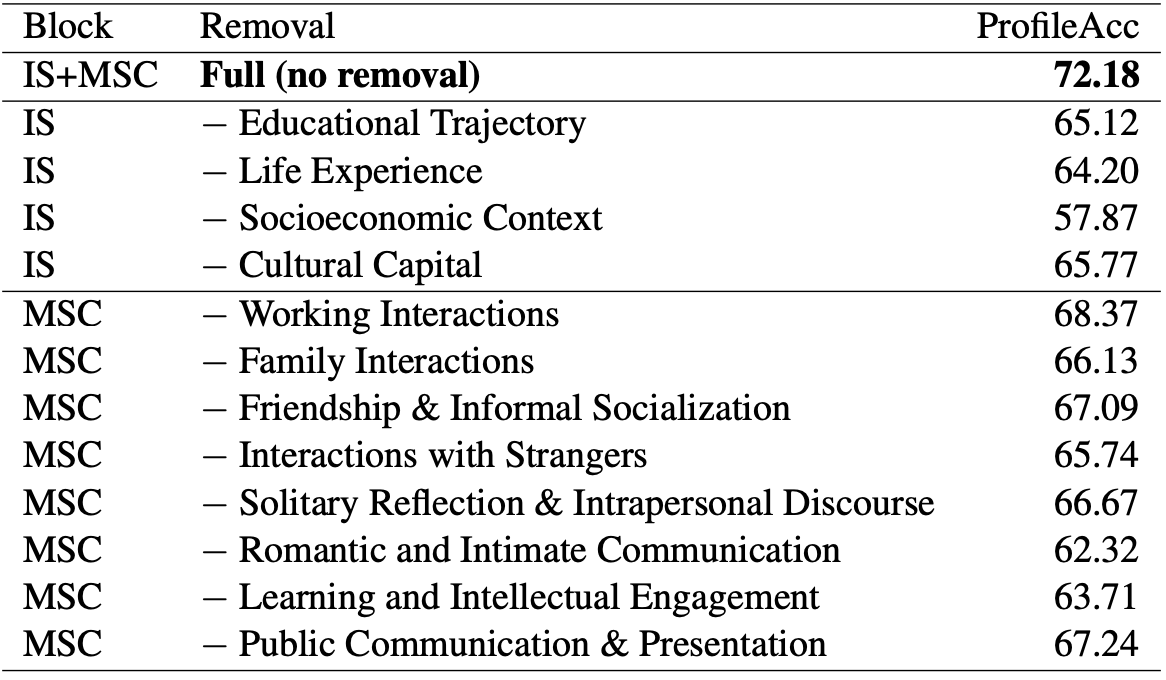
Table 3: Block removal ablation highlighting the complementary roles of IS and MSC.
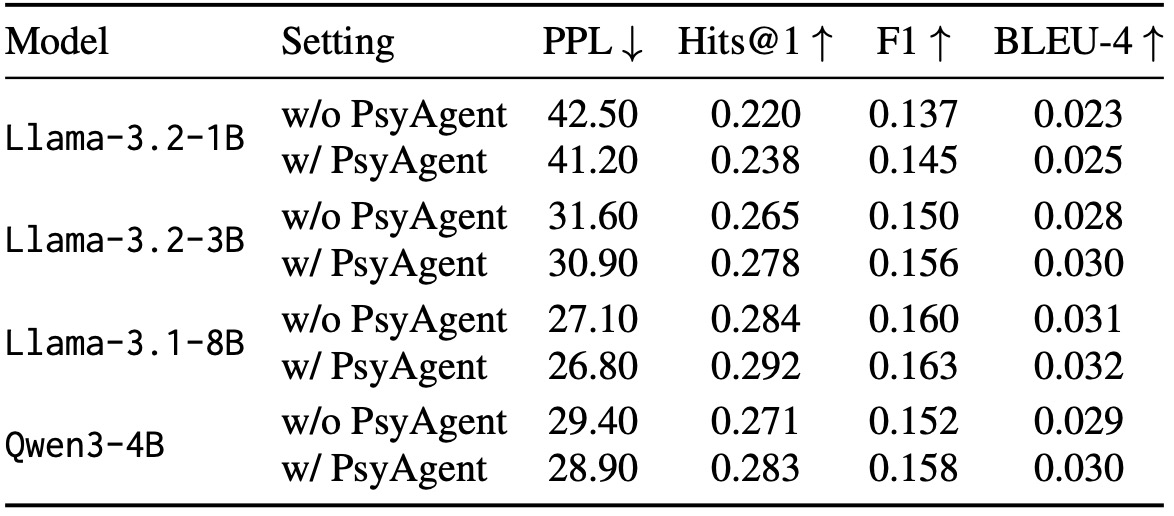
Table 4: External benchmark (ConvAI2 Persona-Chat) automatic metrics under w/o vs w/ PsyAgent conditioning.
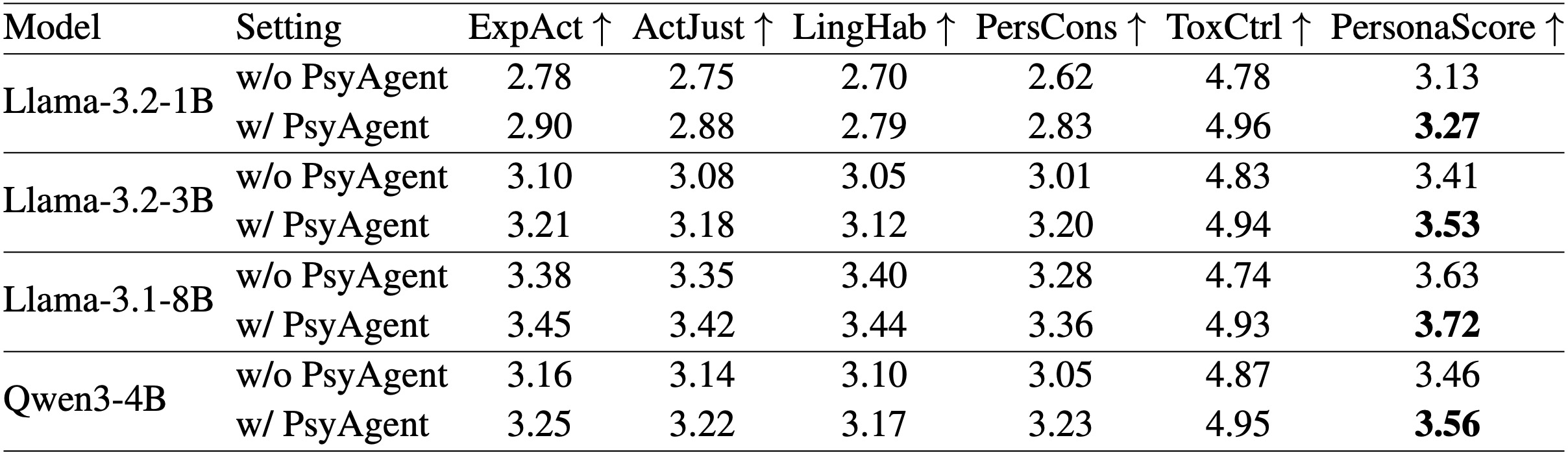
Table 5: PersonaGym benchmark-v1 results (persona-related task scores and PersonaScore) comparing w/o vs w/ PsyAgent.